
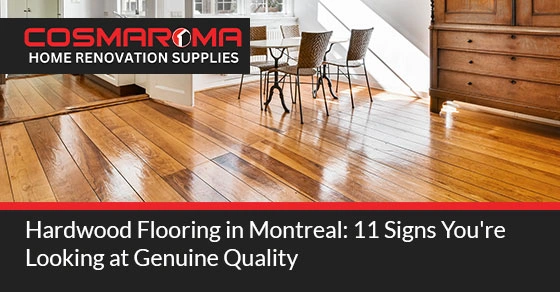
Stepping into a Montreal flooring showroom can often feel slightly daunting. Every plank seems radiant under the gallery lighting, yet the cost fluctuates significantly, and every representative insists their specific selection is the best choice.
In reality, wood flooring is not manufactured to a single universal standard. While certain materials maintain their beauty for three decades, others may begin to exhibit structural issues after experiencing their first Quebec winter.
Fortunately, you can see authentic craftsmanship. When you understand what to look for, distinguishing high-end products from inferior ones becomes easy. Identifying these markers separates a lasting home investment from a costly mistake.
This guide explores 11 signs of premium-quality flooring to help you shop with complete confidence and secure your home improvement budget.
What Quality Looks Like in Montreal Hardwood Flooring

Before you buy, evaluate these eleven markers to identify truly high-quality solid hardwood flooring in Montreal.
1. The Wood Species Is Clearly Named
Good sellers tell you exactly what kind of hardwood flooring you are getting. Oak, maple, hickory, and walnut all have different prices and hardness levels. If a label just says “premium wood” without a specific name, be careful. You might not be getting what you paid for.
The type of wood also tells you how it will handle wear. For example:
- Hickory is great for busy homes with kids and pets.
- Maple looks smooth and works well in modern rooms.
- Oak is a classic choice that fits almost anywhere.
When a seller can answer specific questions about the wood type quickly, you know they are experts. Honest suppliers want you to understand exactly what you are buying.
2. The Plank Thickness Is Honest and Substantial
The thickness of a floor shows how long it will last. Standard solid wood is usually three-quarters of an inch thick. This thickness allows you to sand and fix the floor many times over the years. Thinner boards might look the same at first, but they won’t last nearly as long.
If you are looking at engineered wood in Montreal, check the top layer that you walk on. A top layer that is 2 mm or less wears out quickly. A thicker layer, between 3 mm and 6 mm, is much better because it can be fixed if it gets scratched.
Please make sure you understand the difference between hardwood and engineered hardwood flooring for your Montreal home before committing to either option.
Good stores will show you a sample that is cut open so you can see these layers. If a salesperson won’t talk about thickness, it is best to look for a different store.
3. The Finish Feels Smooth and Even
Run your hand over a sample board. A good finish feels smooth and the same all over. You should not feel any rough spots, sticky areas, or brush marks. The coating should look like it is part of the wood, not like a separate layer on top.
For example, a strong aluminum oxide finish helps prevent scratches and keeps its shine much longer than cheap coatings. UV-cured finishes are also a good sign because they are harder and more even than finishes that just dry in the air.
The finish should look the same on every board in the box. If one piece is shinier than the one next to it, the quality is not very high. A reliable floor looks uniform because all the pieces were made together.
4. The Grain Pattern Is Natural, Not Repeating
Real hardwood flooring has its own unique look. Each board should show slightly different patterns, knots, and colours because that is how trees grow. When you look at several samples, you should see a natural mix rather than the same pattern repeating.
Also, the wood grain should look like it is part of the wood, not just printed on top. Cheap floors often try to copy this look, but you can easily see the same pattern repeat when you lay the boards side by side. Real wood never has this problem.
For example, different types of oak show different patterns, like straight lines or flowing curves. Both are nice, but they should not look like they were made by a machine. If the boards look too perfect or exactly the same, you are probably looking at a fake product rather than real wood.
5. The Edges Are Milled Cleanly
Pick up a board and look at the edges. They should be clean, straight, and smooth without any splinters. When you put two boards together, they should fit tightly without any gaps or shaking. This good fit helps the floor stay strong and look great for a long time.
Also, look for slightly slanted edges (micro-bevelled). These small details make the floor look better and hide tiny gaps that happen when wood naturally moves with the seasons.
Poorly made edges leave gaps that catch dust and make the floor feel loose. Cheap boards often chip or break when you try to install them, which wastes money and time. Quality boards show that the maker paid attention to detail.
6. The Moisture Content Is Properly Controlled
This is the hidden sign that shows if a seller is a pro. Real wood needs to be dried in a kiln to the right level, usually between six and nine percent for homes in Canada. If the wood is too wet or too dry when it arrives, it will warp, shrink, or buckle once it hits the air in your house.
A good seller will also talk to you about letting the wood sit. You need to let it adjust to your home for a few days before you install it. They will also remind you that basements in Quebec need extra care to keep the moisture levels right all year long.
Trustworthy sellers often print the moisture info right on the wood bundles. If a seller doesn’t know the moisture level of their product, they probably aren’t storing it the right way. Checking this one detail can save you from spending thousands on repairs later.
7. The Warranty Is Specific and Reasonable
Good companies stand behind their floors with clear, written rules. Look for separate protection for the top finish (often 15 to 35 years) and the strength of the wood itself. Avoid vague promises like “lifetime warranty” that don’t explain the details.
Read the small print before you buy. A fair warranty tells you what is not covered, such as water damage or poor installation. Even when you buy hardwood flooring in Montreal at a discount, make sure it includes a warranty. Being honest about these details is a sign of a high-quality product.
A seller who explains the warranty shows they respect your money. If they tell you not to worry about it, they might be hiding something. A clear warranty shows the maker is confident in what they built.
Local Details That Set Trusted Montreal Suppliers Apart
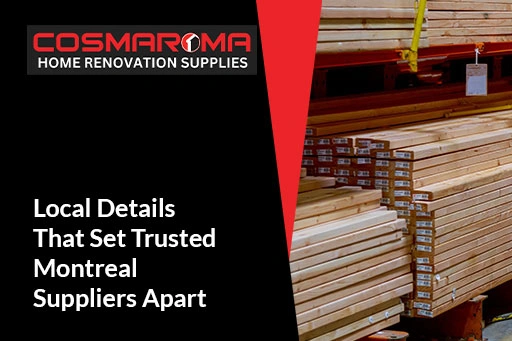
These next four signs depend on where you shop and how the store treats you.
8. The Showroom Holds Real Inventory, Not Just Samples
A good store keeps real wood in stock, ready for you to take home. Stores that only show samples and require you to order your hardwood flooring from somewhere else can make you wait for weeks. This also means you can’t check the actual wood before it arrives at your house.
Having the wood in the store means you can see a large pile of it, not just one small board. This gives you a better idea of what the whole floor will look like when it is finished.
For example, Cosmaroma in Pointe-Claire has wood ready for pickup the same day. You can also compare different types of wood in person. This shows that the store is serious about flooring.
9. The Pricing Is Transparent and Competitive
Good quality and fair prices usually go together. A trustworthy seller will give you a clear quote. It should show the price for the wood, the padding, and the delivery fee, with no hidden costs.
The best deals often come from warehouse stores that buy in bulk. They can offer lower prices without lowering the quality of the wood.
Be careful with wood that is very cheap. It might have a thin top layer or a weak finish. A clear and honest price list is a very good sign that you are in a good store.
10. The Staff Knows the Product Inside and Out
You can tell a store is good by talking to the staff. They should be able to answer questions about how hard the wood is, how to install it, and how to handle moisture. If they just tell you to read the manual, they probably don’t know the product very well.
Good staff will also ask you questions. They will want to know about your home, your pets, and your kids before they suggest a floor for you.
When the team can explain why one wood is better than another for your specific basement or condo, you are getting real help. This helps you avoid mistakes and shows that the store is reliable.
11. The Selection Covers More Than One Style
A serious supplier will have many different styles, sizes, and colours to choose from. You should find wide and narrow boards, light and dark wood, and different textures in one place. If they only have a few options, they might just be selling whatever was cheapest for them to buy.
A large selection also makes it easier to find matching trim and doors in the same store. This saves you time and makes your whole project look better.
When a store offers many options, you can easily compare them and pick the best one for your home. This variety is a sign of a high-quality supplier.
Picking a wood floor is a big choice that adds value to your home for many years. These eleven signs give you a simple checklist to find real quality. This works whether you are fixing up an apartment or building a new house. Montreal has many hardwood flooring stores, but only a few meet all these standards. Take your time and ask lots of questions. Trust what you see and feel when looking at the wood. Experts like the team at Cosmaroma can help you feel sure about your purchase so that you don’t have any regrets later.