

Your choice of vanity is a vital component of any renovation or refresh of your Ottawa home’s bathroom. More than just an aesthetic feature, it significantly impacts the room’s functionality and overall appearance. In Ottawa’s growing market for premium, fashionable vanities, potential vanity buyers should carefully evaluate several key features before making their selection.
In this blog, we will discuss the key features to look for in a bathroom vanity in Ottawa. These suggestions will help you make a choice that balances functionality, style, and durability.
Choosing the Right Bathroom Vanity: Key Features to Consider
Choosing the perfect bathroom vanity for your Ottawa home requires careful consideration of the features that align best with your space and daily routine. To ensure you make the right investment, focus on the following essentials.
Feature 1: The Right Vanity Size for Your Bathroom
Before starting your research, measure your bathroom. The right size is crucial: a vanity that is too wide will obstruct doors and make the room feel cramped, while one that is too narrow wastes valuable wall space and fails to provide the necessary storage.
Vanity sizes typically range from 24 to 72 inches wide, with popular options at 30, 36, 48, and 60 inches wide.
When planning your layout, remember that the Ontario building code mandates a minimum of 21 inches of clear floor space directly in front of any fixture. A simple measurement check now can save you from making a costly error later.
Feature 2: Countertop Material
Bathroom vanity countertops endure significant daily stress from water, cleaning products, and cosmetics. In terms of bathroom vanity installations, quartz is one of the most popular choices in Ottawa due to its durability. It naturally resists moisture, staining, and daily surface wear, and importantly, requires no sealing.
When selecting a bathroom countertop, consider the practical use of the space rather than focusing solely on showroom aesthetics. While natural stones like granite offer superb longevity, they require routine sealing to maintain their water resistance. On the other hand, laminate countertops, which are more affordable, are susceptible to swelling and delamination, particularly near the sink where water often pools. Choose a material that aligns with your household’s actual bathroom usage.
Feature 3: Sink Style and Placement
The three main sink styles—undermount, vessel, and drop-in—each have a unique look and maintenance requirements.
Undermount sinks are fitted beneath the countertop, creating a smooth, uninterrupted edge that is simple to clean.
Vessel sinks, however, sit above the counter like a decorative bowl. This makes them a trendy, modern option, frequently chosen for bathroom vanity installations, especially in areas like Ottawa.
Drop-in sinks are one of the simplest to install, as they sit directly into a cutout in the counter.
The type of sink you choose will impact the necessary faucet height; for instance, a vessel sink requires a much taller faucet for proper functionality. When making your selection, always consider the bathroom’s daily users to avoid a stylish configuration that ultimately proves awkward to use.
Feature 4: Storage Configuration
Many homeowners underestimate the true amount of bathroom storage they require, a fact that becomes evident shortly after the renovation is complete.
In a family bathroom, a single cabinet door with one shelf beneath a small sink can quickly fill up within just a few weeks. For storing daily necessities such as hair tools, medications, and skincare products, drawers consistently prove to be more practical and efficient than open shelving.
To maximize the longevity of your new cabinetry, prioritize features like soft-close hinges and full-extension drawer glides. For a primary bathroom used by two people, a double-sink vanity is highly recommended; separate storage sections for each person will greatly reduce everyday hassle. Ultimately, the best configuration is one that reflects how the space will truly be utilized.
Feature 5: Cabinet Construction Quality
Bathroom vanity cabinets differ significantly in their construction, which is often not apparent from a picture alone. For handling bathroom humidity, box construction made from solid wood or plywood is vastly superior to particleboard or MDF. The latter two materials tend to absorb moisture, leading to swelling or warping. This durability factor is particularly important in Ottawa, where the sharp seasonal changes between warm, humid summers and dry, heated winters cause considerable shifts in indoor humidity levels.
Investing in better construction, such as drawer boxes with dovetail joinery and plywood interiors instead of particleboard, indicates superior quality and durability. While this may mean a slightly higher initial cost, the longevity and reduced need for premature replacement typically make it a more cost-effective choice over the long term.
Feature 6: Finish and Colour
The durability and maintenance required for a vanity largely depend on its finish. While painted finishes are appealing, they may be prone to chipping on edges in frequently used bathrooms. Finishes like thermofoil and lacquer offer greater resistance to moisture and are typically easier to clean consistently without visible signs of wear.
In Ottawa bathroom renovations, matte finishes are trendy. While popular, they do require more upkeep as they are prone to showing water spots and fingerprints more easily than semi-gloss options. For maximum resale appeal, white and grey remain the most adaptable colour choices. For a more contemporary look, deeper colours like navy, sage, and forest green are gaining popularity and can be stunning when paired with complementary fixtures, such as matte black or brushed brass hardware.
Feature 7: Freestanding vs. Wall Mounted vs. Floor Mounted
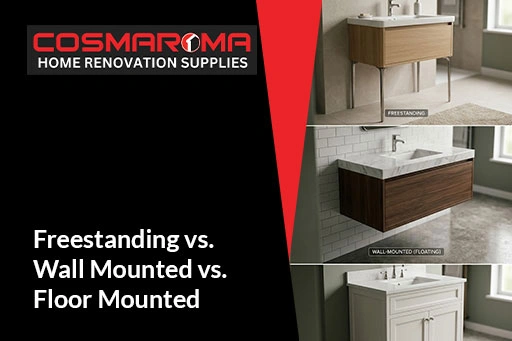
Mounting style significantly impacts both the aesthetic and installation process of a vanity. Floor-mounted vanities, which typically include a toe kick, offer a traditional look and are generally the simplest to install. In contrast, wall-mounted or floating vanities provide a contemporary feel and simplify floor cleaning. However, they demand a more involved installation, requiring a reinforced wall or internal blocking to ensure adequate support for the weight.
Freestanding vanities offer flexibility during a renovation since they can often be moved. However, if you have an older Ottawa home and are considering a wall-mounted design, you should first verify that your wall structure can handle it. Selecting the wrong type can lead to substantial unplanned work once your project is in progress.
Feature 8: Plumbing Compatibility
Before purchasing, confirm that the vanity you are considering is compatible with your existing plumbing rough-in. This is crucial because many older homes in Ottawa have plumbing setups that may not align easily with modern vanity dimensions, particularly regarding the drain location, supply line positions, and whether the setup is intended for wall-mounted or floor-mounted fixtures.
A stunning showroom floating vanity might necessitate moving drain lines in an older home—a cost that could equal the vanity’s price. When budgeting for your renovation, account for potential plumbing adjustments upfront to avoid mid-project surprises. Always consult a licensed plumber before committing to your final choice.
Feature 9: Style Cohesion with the Rest of the Bathroom
A vanity must harmonize with the existing elements of the room. For instance, a sleek, contemporary floating vanity might clash in a bathroom featuring a clawfoot bathtub or a traditionally styled toilet. Conversely, a Shaker-style wood vanity would look out of place in a minimalist modern setting.
To ensure a polished and deliberate look in your Ottawa bathroom, take cues from the existing finishes, colours, and materials of your fixtures. A cohesive approach, such as using brushed nickel throughout, will always yield a superior result. Conversely, mixing finishes—like pairing a chrome faucet with a matte black towel bar—creates a jarring visual inconsistency that detracts from the room’s overall harmony.
Avoid treating individual pieces in isolation. Instead, focus on a unified design.
Feature 10: Single vs. Double Sinks
A double-sink vanity is an excellent choice for a primary bathroom shared by two people. It helps alleviate morning congestion and provides valuable extra counter space.
However, potential buyers in Ottawa should be aware that these units demand significant wall space, and many bathrooms in the city may be too small to accommodate one without feeling crowded. Additionally, a double vanity requires a larger budget for both the unit itself and the increased complexity of the plumbing installation.
For a mid-sized bathroom, a single-sink vanity with ample counter space is often the more sensible option. It is important to consider if a double sink truly enhances your bathroom’s functionality, or if that space would be better utilized in a different way.
Feature 11: Budget Planning and Long-Term Value
In Ottawa, vanity costs vary significantly, ranging from just a few hundred dollars for a standard floor-mount model to several thousand for a customized solid wood unit featuring stone countertops.
It is helpful to consider the total expense as two distinct parts: the price of the vanity unit itself and the installation cost (which generally falls between $200 and $600). This is potentially higher based on the complexity of the job.
Prioritize the longevity and construction quality of your vanity within your budget over aesthetics. A higher-quality, durable vanity, even one in the mid range, often proves more cost-effective over a decade than a cheaper alternative that requires replacement sooner. Superior vanities are an investment that home buyers tend to view more favourably if you decide to sell.
Feature 12: Coordination with Toilets and Bathtubs
For an optimal bathroom renovation, consider the vanity, toilet, and bathtub as an integrated set instead of separate purchases. Your selection of toilet fixtures in Ottawa is crucial, as it impacts the remaining floor space for the vanity and overall room clearances. Similarly, bathtubs in Ottawa offer a variety of sizes and styles, such as standard alcove or freestanding soakers. The proportions of your chosen bathtub will subsequently influence the visually appropriate size and style of the vanity.
A bathroom that feels complete and well-designed is achieved by selecting these elements with a cohesive aesthetic and logical arrangement. When planning a complete renovation, it is worthwhile to inquire about potential package pricing, as many suppliers offer discounts when multiple items are bought together.
By considering these twelve key features when choosing your Ottawa home’s bathroom vanity, you can ensure you select the best option that balances design and functionality. Whether you are remodelling your entire bathroom or simply upgrading your vanity, these factors will help you make a well-informed decision that enhances your bathroom’s appeal and meets your practical needs. Need help? Contact Cosmaroma and start shopping today!